
Picture: Harry Lock
Why the existing EU regulatory frameworks are causing headaches for establishing effective prominence regimes for public service media, and how these challenges can be addressed – an analysis ahead of a review of the EU’s Audiovisual Media Services Directive.
Research Insight presented by the Public Media Alliance
in partnership with IAPMR
By Adelaida Afilipoaie and Tim Raats, imec-SMIT, Vrije Universiteit Brussel
Never before have audiences had access to as much content as they do today and on so many spaces: cable television, smart TVs and connected devices, television broadcasting, video-on-demand (VOD) services, video-sharing platforms such as YouTube, and FAST services – which structure content according to a broadcasting-style scheduling logic.
Yet in an environment defined by abundance, availability does not guarantee visibility. Digital platforms such as on-demand and video streaming services have vastly expanded access to content. Certainly, users can actively search for content themselves, and many do. However, choice overload – combined with a strong reliance on recommendation systems – often places users in a more passive position when navigating digital interfaces.
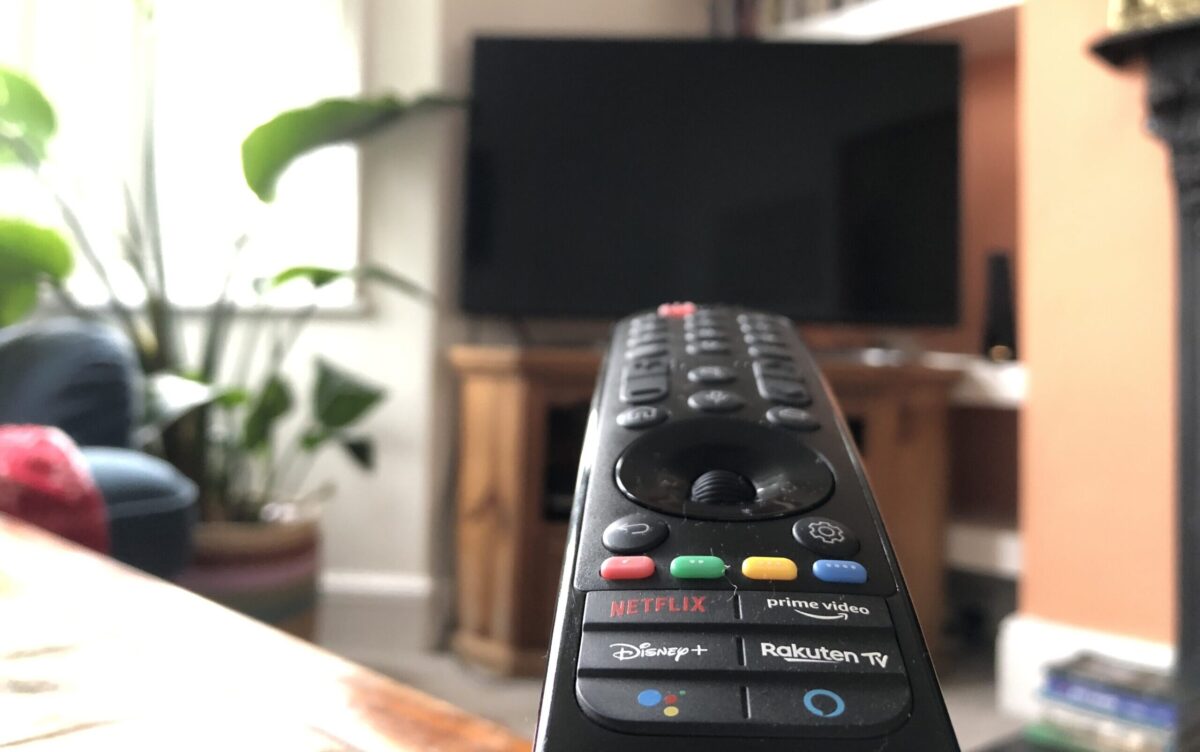
At the same time, hardware interfaces – smart TV’s, smartphones, in-car entertainment systems and game consoles – have increasingly become gateways (and thus gatekeepers) to content and services, as they structure and make different apps visible on their interfaces. Technically however, only a limited amount of space is available to display content or services on landing pages. Several factors influence which content or services receive this visibility, such as:
- Hardware manufacturers often have their own offerings, and proprietary content services and affiliated platforms may receive prominent placement.
- Global streaming services, video-sharing platforms and broadcasters frequently negotiate commercial agreements with smart TV manufacturers to secure visibility priority.
- Recommendations are shaped among others, by user behaviour, their own preferences and their interactions with the platforms.
- The visibility is also influenced by technical factors, including the availability and quality of metadata, alongside the existence of applications that function seamlessly across different smart TV operating systems and device formats.
- Users’ levels of digital and media literacy also affect their awareness of possibilities to switch, install, reorder, and remove applications on the interfaces, with research from Australia by Lobato et al. (2024) noting a quarter of users did not install apps.
If the content most prominent on interfaces reflects commercial decisions or paid-for placement, this may disadvantage smaller creators and providers, who mainly operate within their respective markets, and often lack the financial resources or negotiating power required to secure visibility on these interfaces, such as Public Service Media (PSM). Their mandate is limited to specific territories, which weakens their bargaining power when negotiating for better positions or visibility – even where resources might be available.
At the same time, PSM are guided by the principle of universality. Their public remit requires them to provide news and current affairs, offer a diverse mix of genres, and serve specific target groups, including the provision of minority language content. They are accountable to regulators and governments and are typically majority funded through public funding models.
Against this backdrop, a clear tension emerges between audience expectations, the interests of hardware and interface manufacturers, and the availability of services which are of public interest and should be visible and findable.
There is still a significant lack of insight into the commercial dynamics and the strategies employed by the players in the streaming ecosystem, around the nature of commercial agreements, the objectives assigned to recommender systems that shape recommendation outputs, and agreements involving the pre-installation of services on devices. Together, these practices may create barriers to users discovering services, apps and content, particularly those provided by PSM.
The AVMSD and Article 7a
This growing gap between availability and visibility has increasingly drawn the attention of policymakers, particularly regarding user interfaces and the discoverability of content (European Commission, 2026). In 2018, the EU updated the Audiovisual Media Services Directive (AVMSD) which governs EU-wide coordination of national legislation on all audiovisual media (i.e. traditional TV broadcasts and on-demand services). That revision included the creation of Article 7a, a rather concise and optional provision allowing Member States to adopt measures ensuring the prominence of services of general interest; the positioning of content in a more visible location increases the likelihood that it will be discovered. While the provision sought to address the issues outlined above, its ambiguity, as we explain below, created considerable uncertainty and discouraged many Member States from implementing it into national law.
If the content most prominent on interfaces reflects commercial decisions or paid-for placement, this may disadvantage smaller creators and providers, who mainly operate within their respective markets, and often lack the financial resources or negotiating power required to secure visibility on these interfaces, such as Public Service Media (PSM). Their mandate is limited to specific territories, which weakens their bargaining power when negotiating for better positions or visibility – even where resources might be available.
At the same time, PSM are guided by the principle of universality. Their public remit requires them to provide news and current affairs, offer a diverse mix of genres, and serve specific target groups, including the provision of minority language content. They are accountable to regulators and governments and are typically majority funded through public funding models.
Against this backdrop, a clear tension emerges between audience expectations, the interests of hardware and interface manufacturers, and the availability of services which are of public interest and should be visible and findable.
There is still a significant lack of insight into the commercial dynamics and the strategies employed by the players in the streaming ecosystem, around the nature of commercial agreements, the objectives assigned to recommender systems that shape recommendation outputs, and agreements involving the pre-installation of services on devices. Together, these practices may create barriers to users discovering services, apps and content, particularly those provided by PSM.
In an environment defined by abundance, availability does not guarantee visibility. Digital platforms such as on-demand and video streaming services have vastly expanded access to content. … However, choice overload – combined with a strong reliance on recommendation systems – often places users in a more passive position when navigating digital interfaces.
At its core, Article 7a aims to address a perceived imbalance in the competitive landscape across Member States, particularly between global streaming platforms, technology companies and hardware manufacturers on the one hand, and local media actors – and PSM in particular – on the other. Germany, France and Italy were among the first countries to implement Article 7a and further develop it in national legislation. Flanders (Belgium) has more recently joined this group and has proposed legislation (see Van der Elst, Afilipoaie and Raats, 2025), while Ireland and others have signalled possible legislative developments soon. Countries such as the United Kingdom, Canada and Australia have also introduced extensive prominence rules, suggesting that visibility and discoverability have become global policy concerns.
Although these national approaches share certain similarities, no two regimes are identical. This diversity illustrates the difficulties arising from the vagueness of Article 7a. A study we conducted (Raats et al., 2025), revealed the key dilemmas policymakers and regulators are confronted with when developing due prominence legislation:
- Determining which media service providers qualify as services of general interest and according to which criteria: do governments only consider PSM (as in the UK system), or other commercial or regional services deemed of general interest (the German and Italian systems)? If so, how is general interest defined and what is expected as proof of burden of beneficiaries to demonstrate general interest?
- Deciding whether prominence should apply to entire services or only parts of them. What should get the status of general interest: the app, the entire broadcasting offering, all apps of the same provider?
- Clarifying whether prominence should be recognised at the service level (where the entire service is declared general interest), the content level (where individual items such as specific programmes are declared of general interest), or both?
- Identifying the type of actors responsible for complying with prominence obligations (e.g. smart TV operating system providers, manufacturers of smart TVs, app-stores, pay-TV and IPTV platform operators that combine broadcast channels with streaming apps, voice assistants, in-car entertainment systems).
- Determining which players may be exempt and on what grounds;
- Specifying which authorities oversee enforcement and through which procedures;
- Determining whether and which reporting obligations should apply and, if so, what information should be disclosed and how transparent such reporting should be;
- Clarifying how prominence obligations interact with existing commercial agreements: does regulation replace current deals or is the regulation aimed at encouraging actors to come to a deal (UK system)?
- Specifying due prominence requirements: what exactly is required? Is it a recognisable tile bundling all general interest services or various icons (the Italian system)?
- Determining how detailed or flexible national regimes should be.
In the home and in the car
Some Member States (i.e. Italy, France, Germany, and Flanders in Belgium) envisaged an even broader application of Article 7a, moving beyond audiovisual services and extending its beneficiaries to also include radio services. In the UK, although the AVMSD no longer applies, prominence regulation includes both audiovisual and radio services as beneficiaries of prominence rules. In some cases, the radio services must be given prominence both on the TV screens and on the in-car entertainment system (Italy and Germany). Certainly, as cars have become connected, offering many on-demand entertainment options through digital interfaces, radio risks losing its traditional and intuitive access.
Discussions on the need for prominence for radio services on the in-car entertainment systems have been led by the European Broadcasting Union (EBU) and spearheaded by Swedish Radio via its project called The Playbook. Whether a physical (or virtual) button will be present on the dashboards of connected cars is one of the key topics that is subject to commercial negotiations.
Discussions in this context also include the need for two main due prominence obligations. The first is for voice assistants which, when prompted by the service or content’s name, should ensure that in the case of radio, the system launches the live, official radio stream and not the voice assistants’ default audio services. The second is, when used in the audiovisual context, that it first surfaces the prompted content or service available for free and on the services that the user is subscribed to (with the precondition that the content is available) before other paid-for alternatives.
If prominence rules are to play a meaningful role in the digital media environment, which in our view, they most certainly do, the current framework requires greater clarity and stronger implementation tools.
The (in)compatibility with the EU internal market
Balancing these elements requires Member States to navigate several dimensions, including proportionality, a level playing field, legal compatibility and regulatory flexibility. In practice, however, most Member States that have implemented a regime have been considered by the European Commission to be in potential breach of various EU legal provisions; with the notable exception of Germany.
The country-of-origin principle, enshrined in the AVMSD and established in the E-Commerce Directive, states that information society services (i.e. most online platforms and internet-based services) are primarily regulated in the Member State where they are established. Thus, Member States cannot impose prominence obligations on services established outside their jurisdiction. This limits Article 7a’s objective of creating a level playing field with global platforms that are based in another market. While exceptions to this are allowed under Article 3(4) of the E-Commerce Directive, these exceptions are unlikely to apply to the prominence provisions.
An alternative is using a different aspect of the E-Commerce Directive instead. Article 1(6) states that the Directive should not prejudice measures adopted to promote cultural and linguistic diversity or safeguard pluralism. In this case, Member States could argue that prominence measures are legitimate cultural policy measures.
Further tensions arise in relation to the Digital Services Act (DSA). Under the DSA, user interfaces may qualify as online intermediary services and are therefore exempt from general monitoring obligations. Thus, it is unclear whether user interface providers can be required to monitor and report on prominence obligations, or whether that would fall to regulators .
Finally, the European Media Freedom Act (EMFA) stipulates that users must be able to modify the default settings of their devices and user interfaces freely and easily. This requirement may intersect with prominence rules, meaning that Member States implementing such rules will need to clarify whether users retain full control over interface customisation or whether prominence obligations take precedence, or whether both measures can co-exist.
Where to go from here
If prominence rules are to play a meaningful role in the digital media environment, which in our view, they most certainly do, the current framework requires greater clarity and stronger implementation tools. As the AVMSD will undergo another revision, the European Commission should take this opportunity to reopen the discussion on Article 7a. Greater clarity could encourage more countries to transpose the provision, as prominence, visibility and discoverability have become global policy concerns.
In particular, clarification is needed regarding the scope of prominence obligations; specifically whether they apply to entire services or only to individual programmes, an issue that remains ambiguous given one part of the AVMSD refers to the entirety of the service, while another refers to the content of the services. Additional guidance could outline practical implementation scenarios and specify the metadata requirements necessary to enable effective prominence. Mechanisms should be developed to monitor the compliance of user interface providers, including data sharing obligations that would support evidence-based policymaking and regulatory oversight. While Article 7a currently leaves due prominence optional for Member States, making the provision mandatory – combined with a certain degree of harmonisation across the EU – could strengthen its effectiveness.
And most importantly, the country-of-origin principle limits the ability of Member States to enforce prominence obligations on services established elsewhere. A targeted derogation – similar to the one introduced to allow Member States to impose investment obligations on VOD services located outside their jurisdiction – could therefore be considered to ensure the effective implementation of prominence rules for services of general interest.
If the EU is to uphold the democratic and cultural role of PSM, as recognised in the 1997 Amsterdam Protocol, it must ensure robust safeguards that guarantee their visibility and findability.
Adelaida Afilipoaie is a senior researcher in media economics and policy at imec-SMIT, Vrije Universiteit Brussel. Her work focuses on how Platformization and technological change reshape media ecosystems and the cultural and creative sectors, with particular attention to platform governance, the regulation of the audiovisual sector and more recently content discoverability. Her research is at the intersection of European and national media policy and regulation, competition policy and digital markets, analysing how regulatory frameworks can support pluralism, cultural diversity and competition in platform-dominated media environments.
Tim Raats is Associate Professor at the Communication Sciences Department of the Vrije Universiteit Brussel (VUB). He heads the Media Economics and Policy unit at imec-SMIT- Vrije Universiteit Brussel (Studies on Media, Innovation and Technology). He specializes in media policy and audiovisual market research and has coordinated and been involved in research on Public Service Media management and policy challenges. Tim is currently acting as project lead of the Doctoral Network RePIM (MSCA action, see https://repimnetwork.eu/).