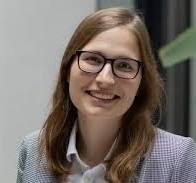
| Picture: Kilian Müller Johanna Wolleschensky is a PhD candidate and research associate at the Catholic University of Eichstätt-Ingolstadt, Germany. Working at the intersection of journalism studies and audience research, Johanna has co-authored several publications, including studies on how PSM journalists respond to the rise of populist parties. She holds a BA in Cultural and Media Education from Merseburg University of Applied Sciences and an MA in Children’s and Youth Media from the University of Erfurt. During her MA studies, she served as research assistant on a project investigating the relationship between journalism and its audience in the digital age at the University of Erfurt. |
Can you tell us about your research on populism and public service media?
In our research on populism and public service media (PSM), my supervisor Annika Sehl and I examine the perspectives of both communicators and audiences. In a previously published qualitative study with German PSM journalists, we explored populism as a double challenge for PSM. On the one hand, we examined how PSM respond to populist attacks directed at them and the impact this has on them and their editorial work. On the other hand, we examined how PSM journalists perceive their role in reporting on populism and right-wing populist parties. We are currently conducting a quantitative comparative audience study in Germany, France, Poland and the UK to analyze public expectations regarding PSM’s reporting on right-wing populist parties, as well as the individual predictors that influence these views.
In a recent study that you conducted together with Annika Sehl, you examined how German public service media representatives respond to populist criticism. You found that while populist attacks do not lead to long-term self-censorship, they do result in temporary self-censorship on social media. Can you elaborate on this finding?
In our study of the impact of populist attacks, we identified several resulting adjustments. For instance, security measures become necessary when reporting on protests, and the choice of words, especially on social media, is adjusted. These adjustments are also made to protect journalists, but they do not withhold information from the public. In our interview study, however, we also heard of cases in which content was not initially posted on social media, for example because the community management team was understaffed. In these cases, PSM representatives temporarily withhold their work to protect themselves, their organizations, their sources or minority groups. As this aligns with our definition of self-censorship as the withholding of information, we have argued that such adjustments can be conceptualized as a form of temporary self-censorship on social media. We refer to this as ‘temporary’ because the content is usually still published, albeit with a delay. However, this does not apply to time-sensitive content or current information. Conversely, as we also note in the paper, this adjustment can also be viewed as a rational response to limited capacity for social media moderation, aimed at avoiding reputational damage.
Are there certain aspects of the debate on populism and public service media that you would still consider underresearched? If so, what would be needed to better understand these issues?
In my view, the perspective of people with populist attitudes toward PSM has been particularly understudied. Some studies on this topic already exist, but I believe qualitative findings would be particularly relevant here in understanding why they distrust PSM, whether there are concrete strategies that could improve trust, and whether perceptions of PSM as part of the political establishment or a ‘corrupt elite’ may limit the effectiveness of trust-building strategies.
Your PhD project broadens the perspective on journalism-audience relationships by moving beyond public service media to examine how social media journalists in general perceive their audiences and vice versa. Can you tell us about this project? How exactly do you explore both sides of the journalism–audience relationship?
My PhD project examines the perceptions that social media journalists – including, but not limited to, those from PSM – have of their audience, what audience expectations they anticipate, and how this relates to the expectations that members of their audience actually express. My project is therefore a relational study which, methodologically, focuses on both ‘sides’ of the journalism-audience relationship – that is, journalists and audience members. The project consists of two sub-studies and is designed as a Q-sort-study, with the respective Q-sort elements and interview guides being very similar in order to enhance comparability.
Is there any (emerging or senior) scholar that has particularly impacted your work? Who and why?
My PhD project and my interest in PSM research are both particularly focused on relational perspectives, i.e., work that considers the perspectives of both the communicator and the audience. In this regard, the work of Wiebke Loosen has been particularly influential for me. This also applies to questions concerning expectations in journalism studies. In the field of media and populism research, I have been particularly inspired by the work of Nayla Fawzi and Ayala Panievsky. However, the person who has undoubtedly had the greatest influence on my own work is my supervisor Annika Sehl. She is not only a leading voice in PSM research, but also someone from whom I have learned a great deal about journalism studies more broadly. I have particularly valued her international comparative perspective, her methodological rigor, and the way she has encouraged me to develop and sharpen my own perspective.