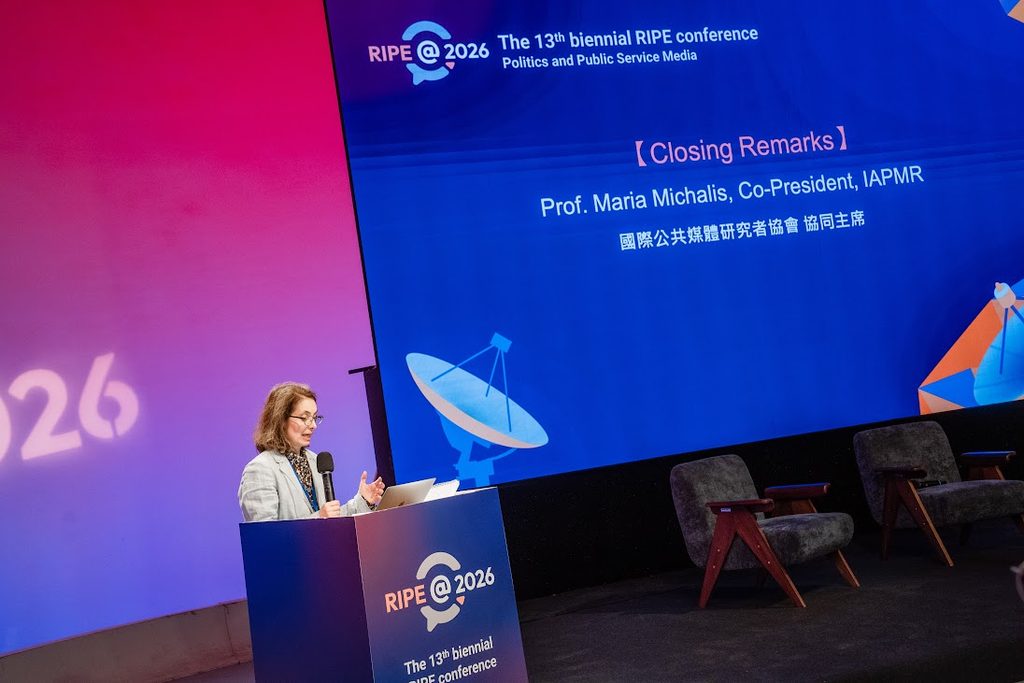
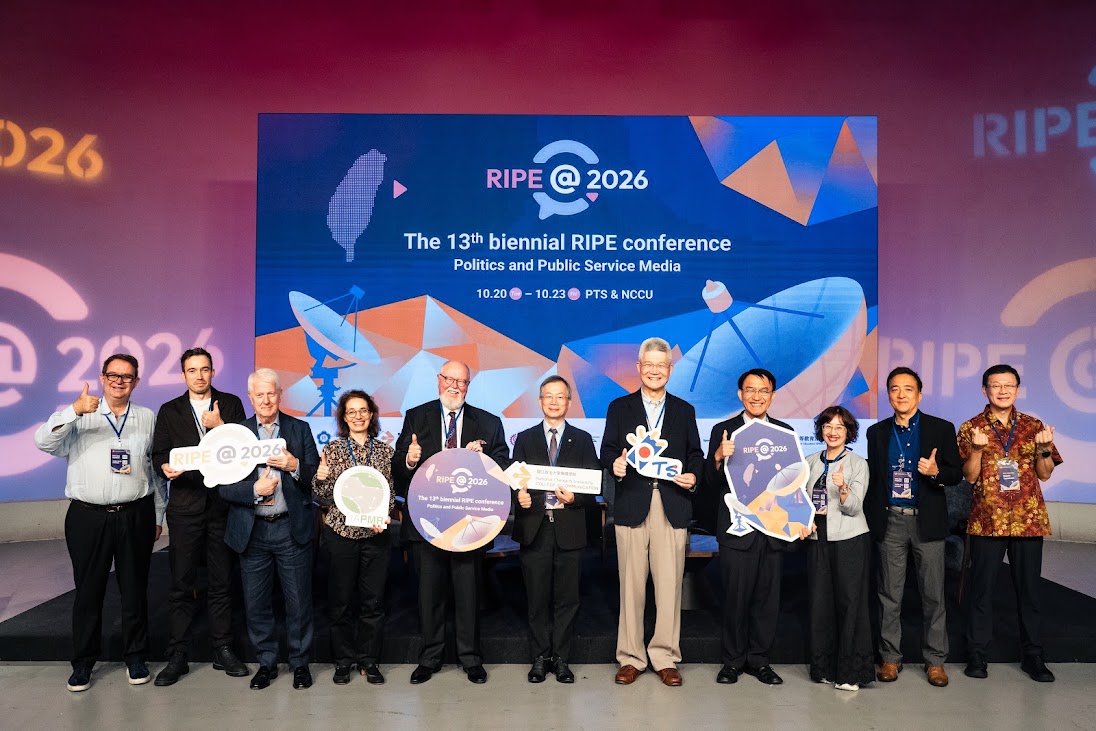
RIPE@2026, themed “Politics and Public Service Media,” took place in Taipei, Taiwan, from 20–23 October 2026, sponsored by the Taiwan Public Television Service Foundation (PTS) and hosted by the School of Communication at National Chengchi University. Bringing together an international community of researchers, educators and media practitioners, the conference featured 47 papers and fostered a timely dialogue on the future of Public Service Media amid shifting geopolitics. From Taiwan’s distinctive PSM experience and Indigenous voices to debates on media independence, trust, sustainability and international collaboration, the event connected perspectives from the Global North and South. Even a typhoon could not disrupt the spirit of exchange, as the RIPE community successfully moved online, closing the conference with a powerful demonstration of resilience and solidarity.
This event began with a field visit to the Taiwan Contemporary Culture Lab (C-LAB) on the evening of 20 October. Marked by the wartime legacy of two architecturally significant structures, C-LAB is also recognised as a historical site left by the Imperial Japanese forces and U.S. aid over the past century. It reflects the geopolitical history imprinted on this Far East region. Renovated by Taiwan’s new democracy, the site has become a welcoming space for curators and practitioners to collaborate. For RIPE participants, it offers a warm starting point for a two-and-a-half-day engaging journey reviewing the current challenge worldwide posed to PSM.
Practice Day at PTS
The first day offered a refreshing experience on PSM, highlighting Taiwan as a distinctive and important case from the Global South. The Taiwan Public Television Service Foundation (PTS) hosted a one-day seminar at its headquarters. A PTS studio was opened to all participants for an intensive exchange of viewpoints and practices gained from its survival. The first encounter is a panel invited by Taiwan’s international channel alongside its allies from Korea, Malaysia, Singapore, and India. These five neighbouring channels were established with enduring missions of nation-building and public diplomacy.
The next half-day of practice focuses on the niche and repositioning of PTS in today’s geopolitics. Domestically, PTS, Taiwan’s sole PSB, was established with a commitment to keeping pace with the latest technological and media developments. It continues to demonstrate its public service mission through its programming and its contribution to Taiwan’s soft power. However, internationally, in recognition of its status within the Global South, PTS is being repurposed and naturally transformed into the following three sessions to represent itself.
Emergency alert and climate change literacy have been identified by professional workers as the champion of PTS, serving residents across the island. Some measures are even being incorporated into children’s programmes. Politically, PTS is also setting a benchmark as the first literacy programme focused on war mobilization and preparedness.
A linguistic multiple service represents the second unique feature of PSM in the world. Two end-to-end channels for minority languages are well established. For accessibility, an AI-powered sign language avatar is provided. The third key issue in repurposing PTS for the global stage is international exchange. This is an extremely important mission for Taiwan PSM, given that the nation’s sovereignty has long been denied by the international community due to geopolitical concerns. PTS is the sole entity representing the local audiovisual industry in multilateral organisations through its programming, innovation, and creativity. The RIPE conference held in Taiwan serves as a clear example of an initiative that ultimately achieved little progress.
79 participants, six workgroups
Day 2 of the RIPE conference, hosted by the College of Communication at Chengchi University, a leading institution for social sciences, the focus returned to this year’s critical theme: the increasing importance of politics and PSM. A total of 47 papers were accepted for presentation, with authors willing to present in person. Including the Chairs and Vice-Chairs of each workgroup, the total participants and authors were 79, including 37 from Europe (46.8%), 36 (45.6%) from the Asia-Pacific region, and 6 (7.6%) from North America, with one African participant.
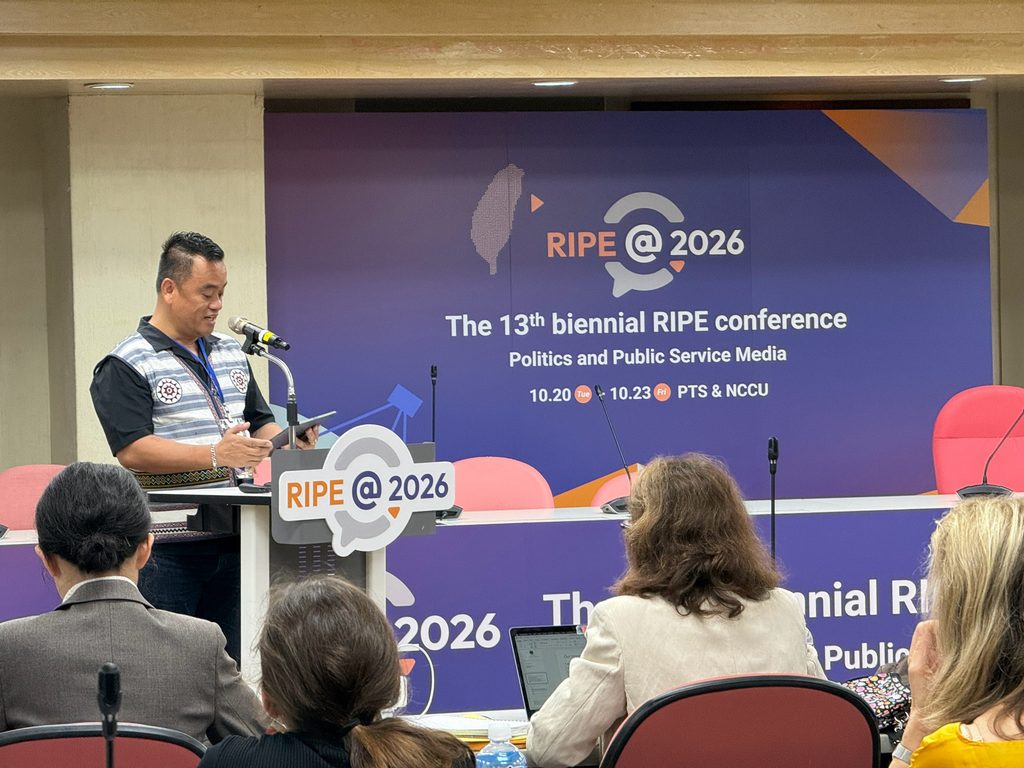
The inaugural speech was delivered by Mr Maros, Chairperson of the Indigenous Peoples Cultural Foundation (IPCF). With authentic and intuitive approaches, this presentation offers a compelling perspective in regard of the general understanding of PSM. Through song and multi-language, it conveys more than words alone, allowing a deeper appreciation of the nova public service content embraced by Taiwan and its neighbouring tribes.
Following the session, a first breakout session for the six workgroups began. These were divided according to the themes of Independence, Geopolitics, Policy-Making, Platform, Trust, and Sustainability & Future. The session featured intensive presentations, enquiries, debates, and a convergence of ideas, all conducted with great enthusiasm for knowledge sharing amid the recent turbulent political climate affecting public service media worldwide.
Perspectives on PSM in Southeast Asia
The host of RIPE@2014 in Tokyo, Professor Nobuto Yamamoto, was invited to be the second keynote speaker. He reviewed the progress of PSM in Southeast Asia, including its political backlash. During the talks, Professor Masduki from Yogyakarta, Indonesia, also shared a meaningful local observation, bringing valuable first-hand knowledge to the event.
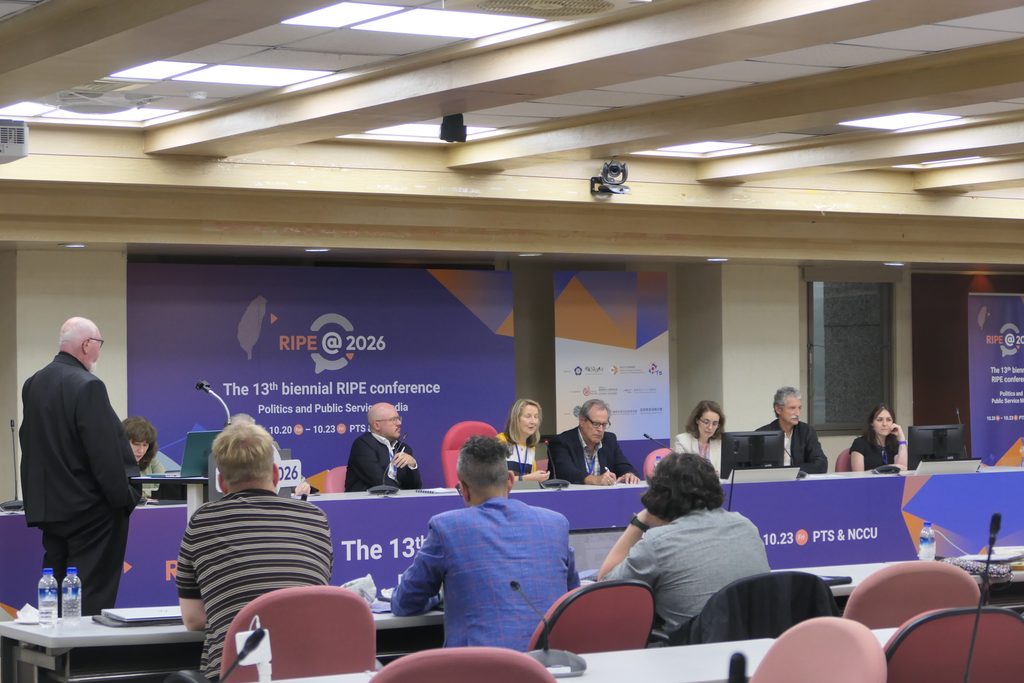
A Special Book Session was held at the end of Day 2. Professor Gregory Ferrell Lowe, founder of RIPE, introduced the forthcoming book, “Routledge Handbook of Public Service Broadcasting”. This collective work is compiled into 30 chapters, divided into five parts. It serves as a comprehensive guide from public service broadcasting (PSB) to public service media (PSM), tracing their development from the past to the present, from the West to the East, and from the developed North to the Global South. The most valuable aspect is that almost all contributors have had some connections with the RIPE Biennial Conferences over the past 25 years. This publication is the result of rich and intimate exchanges between scholars and experts who share a common ideal and goal in this uncharted world. Many expressions of appreciation followed the presentation of the talented contributors’ work in the book’s chapters.
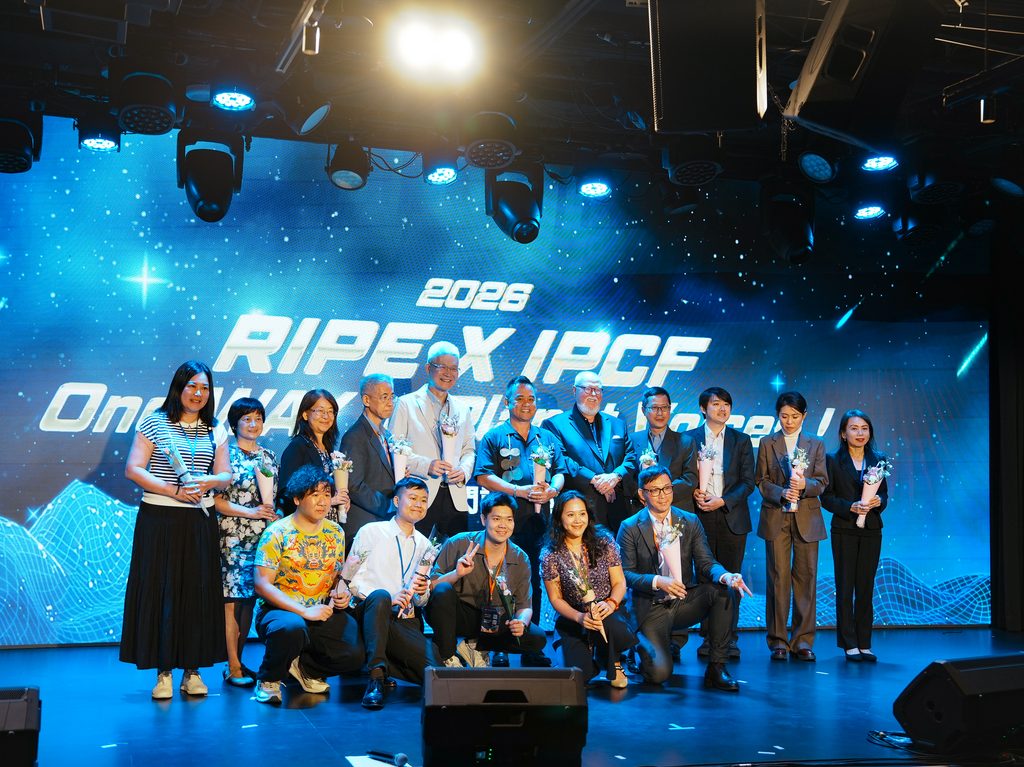
Finally, a Gala Dinner was hosted by IPCF at Billboard Live Taipei, located in the heart of the most prosperous commercial district of Taipei. The event, entitled “One Way to Planet Voices,” showcased the creativity of the young indigenous Taiwanese generation in popular music and multicultural performance. Before the programme began, a special ceremony was held to announce the RIPE Award for Excellence in Public Service Media Research and Practice. This year, there were two honourees: Maria Michalis and Alessandro D’Arma, both serving as co-presidents of IAPMR, “with appreciation for significant contributions in scholarship and leadership.”
RIPE@2028 announcement
Additionally, a surprise announcement revealed the host of RIPE@2028. The School of Culture and Education, Department for Media and Communication Studies from Södertörn University in Sweden will be the next organizers, joining forces with Swedish Public Television SVT.
With appreciation to the 2026 organisers in Taipei, a vivid and entertaining evening was created by an authentic Taiwanese song festival. Finally, the indigenous DJ Mayá led all the participants in dancing hand in hand. This marks one of the first records at the RIPE conference.
Final day amid turbulent wind and rain
The final day of RIPE demonstrated its resilience by effectively preparing for the impact of Typhoon CHAMPI on Taipei city. The organisers promptly switched to an online conference format. This was the first time the RIPE community delivered an enhanced hybrid mode for the conference. During a three-hour session, a final and brilliant keynote speech was given by Prof. Terry Flew, six breakout rooms were held for wrap-up discussions, and again a plenary session for workgroup reports was completed without disruption. It was a cherished and joyful ending by this virtual encounter but living at the same site, what a never happened again to show our solidarity under such harsh circumstance in one of Asia Pacific state standing at the forefront of new geopolitics today.
Bon Voyage, and see you in Stockholm!